
Key information
Overview: This grant call invites research proposals exploring evidence, tools and interventions to study and improve the lifetime impacts of meningitis.
Funding amount: Up to £50,000.
Funding duration: Up to 18 months.
Open to: Researchers based in the UK, Republic of Ireland and low- and middle-income countries.
Application deadline: 24 March 2026.
What research are we looking for?
Meningitis can have a profound and lasting impact on individuals, families and communities. Our collection of experiences, Meningitis in your words, highlights the voices of those affected by meningitis. While significant progress has been made in the prevention, diagnosis and acute care of meningitis, there remains a critical gap in understanding and improving the lifetime impacts.
Research into the lifetime impact of meningitis remains underfunded. Our snapshot analysis of global spend on meningitis research revealed that only 0.6% of research funding was spent on the clinical, social and economic impact, compared to 51% spent on vaccines, and 26% on diagnosis and treatment. There is an urgent need for evidence that captures the full trajectory of the disease and its aftermath, particularly in low-resource settings and among under-served populations.
We’re therefore inviting research proposals for studies with one or more of the following aims:
- Generate new data and evidence on sequelae risk factors, burden and impact of meningitis on individuals and/or their support network.
- Develop, test or refine methods and tools to improve how we identify and/or measure sequelae and the impact of meningitis.
- Develop, test or refine approaches or interventions to reduce the impact of meningitis sequelae and directly improve quality of life for individuals and/or their support network.
These catalytic grants are designed to help generate preliminary data that can be used to underpin future, larger-scale funding applications. Read our research strategy.
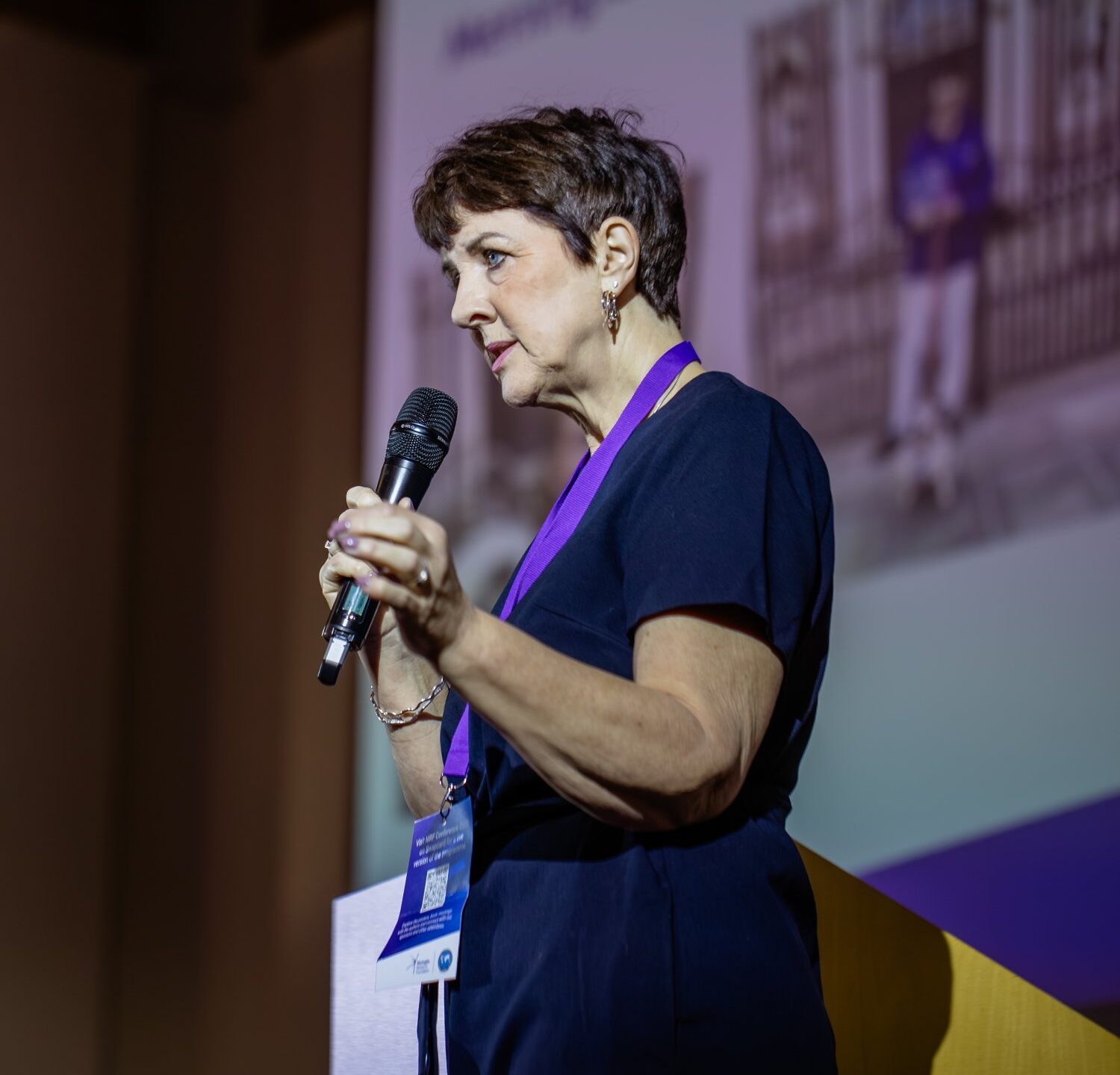
Research into the lifetime impacts of meningitis matters as survivors, like my daughter, deserve to be celebrated, understood and supported by society.Karen Williams, Meningitis Research Foundation Ambassador
What your proposal can explore
- Any type of impact, including (but not limited to): physical, neurological, psychological after-effects (also known as sequelae); social and well-being impact; economic impact; educational/vocational impact.
- Any type of meningitis.
- People who have survived meningitis, their support network (such as parents, family or carers), or the support network of people who died from meningitis.
- Any type of intervention to reduce severity and improve quality of life at any point after a diagnosis of meningitis.
- The proposal may use any robust and well-justified study design.
Proposals we especially encourage
- Those led by early-career researchers.
- Those that include an element of participatory research, where people with lived experience of meningitis are involved in the design, implementation and/or analysis of the research.
- Those that will generate data in low- and middle-income countries.
What we can’t fund
- Applications that solely look at how to improve diagnosis, even though a faster and more accurate diagnosis should lead to more effective treatment and reduced after-effects.
- Applications that focus on the host-pathogen response during infection that contributes to after-effects.
- Applications that will conduct research outside the UK, Republic of Ireland and low- and middle-income countries.
How do I apply?
1. Read application guidance
Read all sections on this webpage and our application guidance page.
2. Complete the application form
Download the application form and complete all sections.
3. Prepare and attach supporting documents
Additional attachments you will need to download and complete to support your application form include:
- Budget template (Excel).
- Due diligence form.
- Any other required documents as specified in the application form.
Please ensure your administering organisation completes the due diligence form before submitting your application.
4. Check your submission
Before sending us your email submission, please ensure that:
- The application form has been completed in full.
- All required supporting documents are included.
- Files are named clearly. Please use this format: DocumentType_LeadApplicantName. For example, ‘ApplicationForm_JohnSmith’.
5. Email us your application
Email your completed application form and additional attachments to researchteam@meningitis.org before 17.00 GMT, 24 March 2026. Late submissions cannot be considered.
Please use the subject line ‘Grant round 2026 application – [lead applicant name]’.
If you don’t receive an email confirmation within 48 hours of submission, contact us at the same email address.
Who is eligible?
We have geographical limitations depending on whether you are the Lead Applicant or Co-Applicant/Collaborator. Individuals at any career stage who are actively involved in research are eligible to apply. This can include (but is not limited to) academic researchers, healthcare professionals, and others working in research-related roles. Early-career researchers are especially encouraged to apply.
Location
The research must be conducted within the UK, Republic of Ireland or a low- or middle-income country (LMIC).
We base eligibility on the Organisation for Economic Co-operation and Development (OECD)’s DAC list of ODA recipients and include all low‑ or middle‑income countries.
This guidance document consolidates these countries into one group (encompassing low‑income, lower‑middle‑income and upper‑middle‑income economies in the DAC list). We take this approach to avoid confusion created by the DAC’s split between lower‑ and upper‑middle income categories. However, the following exceptions still apply. We can’t fund individuals or activities based in mainland China, because of the Chinese Overseas Non-Governmental Organisation Law, or in countries subject to UK sanctions.
Applicants from international institutions are welcome to apply, provided they can comply with our terms and with UK legal, ethical and financial requirements.
The lead applicant:
- Must be employed at an eligible administering organisation (see below).
- Can only be lead applicant on one application.
- Can be a co-applicant on one other application.
- Must demonstrate sufficient experience of people and research management to carrying out the research study effectively.
Co-applicants:
- Can be a co-applicant on a maximum of two applications.
- Must be essential to the delivery of the proposed research and make a significant contribution, for example designing or leading on a specific aim.
- Can be based anywhere in the world apart from mainland China and areas subject to UK sanctions.
- Must complete and sign the co-applicant section of the application form.
Collaborators
There is no limit to the number of collaborators an application can have, but the added value must be clear. Collaborators can be based anywhere in the world apart from mainland China and areas subject to UK sanctions.
Collaborators may contribute to the application or provide a letter of support to strengthen the application, but this is not a mandatory requirement. It is the responsibility of the lead applicant to confirm that named collaborators are happy to be included in the application.
The administering organisation
The administering organisation is who will receive and distribute the funding according to the submitted budget. It is usually the employing organisation of the lead applicant.
The administering organisation must be based within the UK, Republic of Ireland or a low- or middle-income country (LMIC).
It can be a:
- Higher education institution.
- Research institution.
- Charity or non-profit organisation.
- Government body.
- Non-government organisation (NGO), including civil society organisations.
Who can’t apply
- Applicants or institutions unable to meet the conditions of the grant.
- Commercial and for-profit organisations.
How are proposals assessed?
Our research team will first review your application for eligibility.
All eligible applications will be reviewed by our Scientific Advisory Panel and Lived Experience Advisors, who will score using the following criteria.
Importance (25%)
- What evidence gaps the study will address, and the value of these in defeating meningitis.
- The timeliness of the opportunity.
Methodology (25%)
- The suitability, quality and feasibility of the study design, timeline and methods.
- The choice of population(s)/location(s).
- The suitability and justification of the budget.
Team, skills and experience (25%)
- Whether the team contains the necessary skills and experience, relative to their career stage and role, to successfully conduct the study.
- Whether there’s sufficient project management support.
- Whether the funding will support early-career researchers.
Incorporating lived experience of meningitis (25%)
- Whether people with lived experience have been involved in or consulted as part of writing the application.
- The plan for engaging people with lived experience during and after the research study.
What are the key dates?
Grant round opens: 14 January 2026.
Application deadline: 17:00 GMT, 24 March 2026.
Applicants will receive a decision by: 30 June 2026.
Applicants will be provided with written feedback.
We expect all grants to begin within six months of receipt of signed award letters. However, where ethics approvals are pending, we may allow a start date of up to 12 months, subject to justification and approval.
Please note that we may contact applicants on an individual basis at any time to collect additional essential information required to make an informed decision.
What costs are funded?
Please download our budget template and send us a complete version as part of your application. Please note that amounts should be indicated in pounds sterling (£) and rounded to the nearest pound. All costs must be justified in the indicated column.
Salary
You may request salary for anyone directly involved in delivering the research, at an amount proportional to the time spent on the study. This must be justified in the Excel budget.
Please note that the lead applicant should be employed by the administering institution, and any salary requests must align with the requirements outlined in the further guidance.
Overheads
We won’t pay overheads (indirect costs) if you’re based at a UK university.
You may include up to 15% of the total requested amount for overheads if you are applying from one of the following:
- A university or research organisation based in a low- or middle- income country.
- A charity or not-for-profit organisation.
A full list of costs you can and cannot claim for can be found on our guidance page.
Terms and policies
Terms and Conditions of Research Grant
Please review our terms and conditions carefully to ensure that your application aligns with our standards.
Use of artificial intelligence (AI)
Generative AI tools may support applicants in developing innovative approaches for this research grant round. However, they must be used responsibly and transparently to uphold the values of this funding call.
Privacy policy
We’re committed to protecting and respecting the personal data we hold. Our privacy policy describes why and how we collect and use personal data, including for assessing and managing research funding applications.
Further support
We’re a non-commercial partner of the National Institute for Health and Care Research (NIHR)’s Research Delivery Network. This means the studies we fund may be eligible to access the NIHR Study Support Service (in England).
We meet eligibility criteria for the Charity Research Support Fund and equivalent funding mechanisms across the UK, including Research England (part of UKRI) in England, the Scottish Funding Council’s Research Excellence Grant in Scotland, Medr’s tertiary and research funding schemes in Wales and comparable research quality-related funding streams in Northern Ireland.
Have a question?
If you have a query about the grant's remit or your eligibility, email us at researchteam@meningitis.org. Please note we're unable to advise on the competitiveness of proposals.