
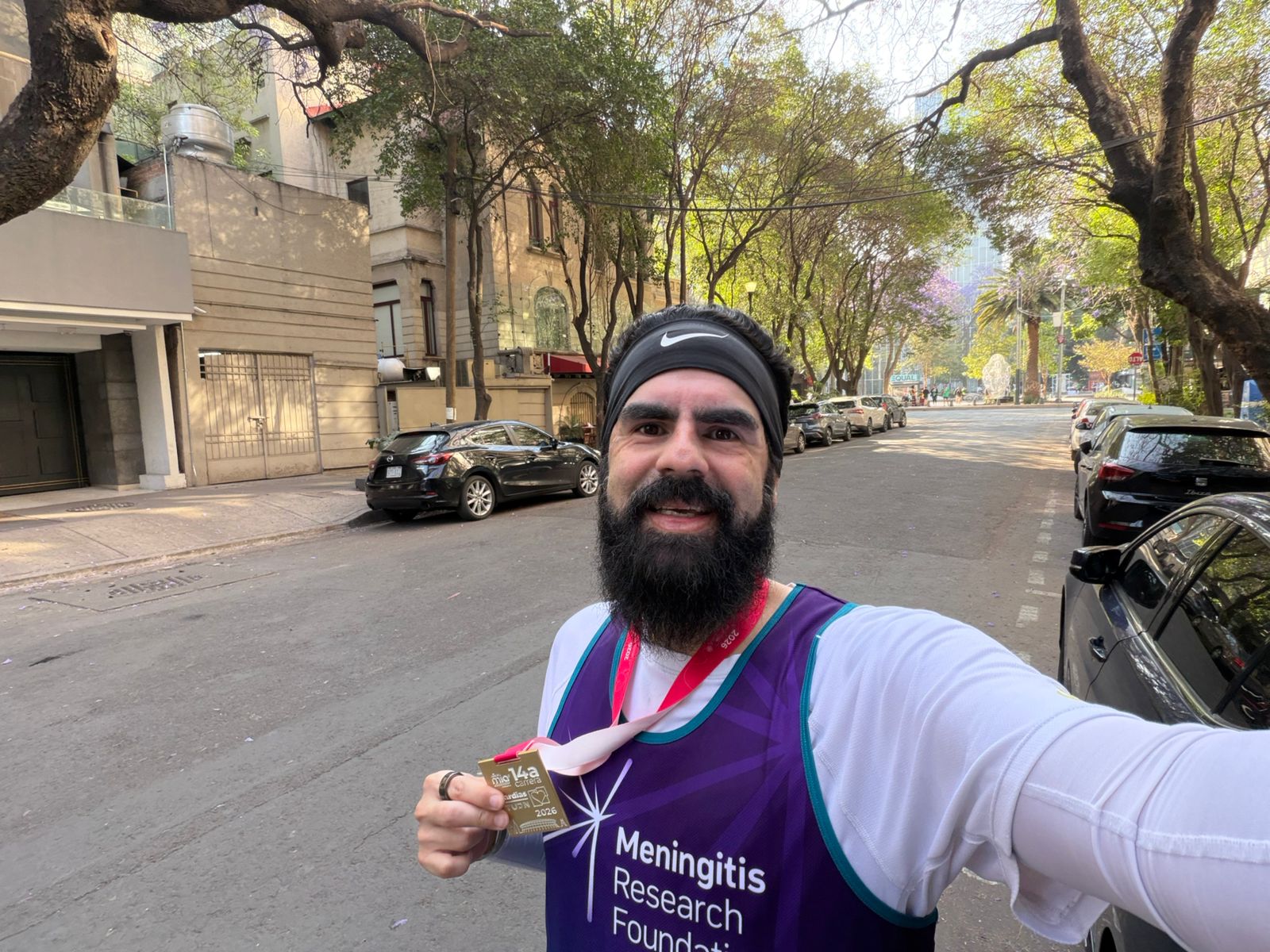
Man to run London Marathon after surviving meningitis three times
Enrique Chavez Garcia will run for Meningitis Research Foundation, as part of his bid to complete the Six World Marathon Majors.

An overview of how meningitis was first identified, the vaccines we depend on to defeat it and the people who created them.
It’s difficult to definitively say how long meningitis has been part of our lives. Medical tools to diagnose the disease are relatively recent in the timeline of human history. But the first recorded observation of what might have been meningitis came from the famous Greek scholar Hippocrates (c.460–370BC), who observed the inflammation of the lining of the brain.
One of the earliest clear descriptions of meningitis came from Thomas Willis (1621–1675), who described patients with “inflammation of the meninges with a continual fever” in 1661.
In the early 1800s, French and English physicians coined the term ‘meningitis’ – combining ‘meninges’ (the name of the brain lining) with the suffix ‘itis’, meaning inflammation. John Abercrombie (1781–1844) was one of the first people to use the term, in his 1828 textbook of neuropathology. After this work, it came into general usage.
An epidemic of meningococcal disease in Geneva was first clinically characterised in 1805 by Gaspard Vieusseux, a general practitioner. Patients were treated with emetics to induce vomiting, quinine wine and bloodletting by leeches. It was believed that reducing the amount of fluid in the body by bloodletting and vomiting would relieve the pressure of inflammation.
The first meningitis outbreak in Africa was recorded in the 1840s. The popular ‘miasma theory’ of the time attributed the spread of the disease to ‘bad air’ and it was not believed to be contagious.
It wasn’t until 1887 that Austrian bacteriologist Anton Weichselbaum identified meningococcal bacteria as a cause of meningitis.
By the end of the nineteenth century, several bacteria were known about, but they could only be identified once the patient had already died. This changed with Heinrich Quincke (1842–1922). Quincke was the first to describe how a lumbar puncture – trapping cerebrospinal fluid with a hollow needle – could be used for diagnosis while patients were still alive.
In 1890, Quincke used a lumbar puncture on a patient with suspected meningitis. Even today, a lumbar puncture remains the only way to accurately confirm a case of meningitis and reveal its cause.
Despite advancements in diagnosis at the end of the nineteenth century, effective treatment was not yet available.
During extensive epidemics of meningococcal meningitis at the beginning of the twentieth century, both Georg Jochmann (1874–1915) in Germany and Simon Flexner (1863–1946) in New York produced an immune serum (or ‘antiserum’), containing specific antibodies from animals who had been injected with meningitis-causing bacteria. This seemed to protect against meningitis as well as having a therapeutic effect. Direct injection of horse antiserum into the cerebral spinal fluid became the main therapy for meningococcal meningitis and was the first effective treatment. In World War I it saved many lives.
Antiserums remained the therapy of choice until the 1930s. Then, American scientist Sara Branham (1888–1962) found that meningococcal bacteria could be more effectively treated with sulphonamides (an agent that kills bacteria). These became the treatment of choice for meningococcal meningitis. Sulphonamides were cheaper and less risky than the antiserum.
Modern treatments changed with the discovery of penicillin by Alexander Fleming (1881–1955). It was first used to successfully treat meningitis in 1942. During World War II, several breakouts of meningococcal meningitis were recorded, especially among military personnel. The first reports of large numbers of meningococcal meningitis patients being treated with penicillin came from the American Army and it was remarkably effective. One report described an outbreak among 71 soldiers. After treatment with penicillin, only one died.
Antibiotics are extremely good at killing meningitis causing bacteria, so are an effective cure, but they don’t always act fast enough to prevent the damage the bacteria can cause. This is why acting fast, if you suspect meningitis in yourself or someone you know, is so important.
In the 1960s, sulphonamides became ineffective, because the bacteria that causes meningitis developed increased resistance to the drug. This is known as ‘anti-microbial resistance’.
Anti-microbial resistance is a threat to the effective treatment of meningitis with antibiotics now and in the future, especially given the lack of new drugs in the pipeline.
Meningitis has many causes, mostly bacterial and viral, and more rarely other pathogens. Preventing the illness requires a sophisticated understanding of how the different pathogens work in order to protect against them.
Vaccines have been the breakthrough needed to prevent infectious diseases. Together with clean water, they have had more impact on the world’s health than anything else.
Vaccines to prevent meningitis were first attempted in the early 1900s, with varying degrees of success. In the 1930s, meningitis vaccines that were safe, stable and effective against pneumococcal meningitis were produced for the first time, followed in the 1960s by vaccines against meningococcal meningitis.
Since then, research has been focussed on creating more effective vaccines that protect against the multiple bacterial causes of meningitis. While there is still no single vaccine that can protect against all forms of meningitis, the development of vaccines has had incredible results.
Conjugate vaccines, which are effective in young children, were a significant breakthrough in preventing the leading causes of the meningitis. The first was the Hib vaccine in 1987, which was introduced to many countries throughout the 1990s. The UK was the first country to introduce a conjugate vaccine against meningococcal disease, with MenC vaccine in 1999.
One of the biggest successes in the history of meningitis prevention has been the MenAfriVac story. Between 1996-97, a quarter of a million people across the ‘meningitis belt’ in Africa were affected by meningococcal A meningitis and 25,000 died from it. Following this particularly devastating epidemic, the WHO, PATH and the Serum Institute of India came together to produce a vaccine that was affordable and developed specifically for Africa.
Conjugate technology was also used to develop pneumococcal vaccines, first introduced in the US in 2000.
Read more about meningitis vaccines.
Fortunately, most people in the UK survive. But the after-effects are diverse. So good quality care and support is not always easily available, even in wealthy countries. In some poorer countries, there may be no support available at all.
Attitudes to physical injuries and health impairments following meningitis have been consistent with the issues facing all people with disabilities. Additionally, the taboos surrounding mental health in society, and the mental health after-effects of meningitis, are only just starting to be acknowledged.
At Meningitis Research Foundation, we are funding research into this, as well as offering comprehensive information and free Support Services in the UK and Ireland.
Two hundred years after it was named, we know much more about meningitis. In the UK, surveillance and prevention have been effective at tackling outbreaks and, excluding 2026’s MenB outbreak in Kent, it usually occurs as isolated cases. Outbreaks and epidemics remain a global concern though, especially in areas such as the ‘meningitis belt’ in Africa.
Meningitis can change over time and can re-emerge as a new threat. There’s still much more to do to improve prevention, surveillance, diagnosis and treatment, and to support people who have been affected by it. Current vaccines also don’t cover all causes of meningitis, so, as vital research into vaccine development continues, it remains critical to know the symptoms.
Enrique Chavez Garcia will run for Meningitis Research Foundation, as part of his bid to complete the Six World Marathon Majors.

Meningitis Research Foundation and Meningitis Now have jointly issued a call to the UK Government to close the MenB protection gap affecting teenagers and young adults.
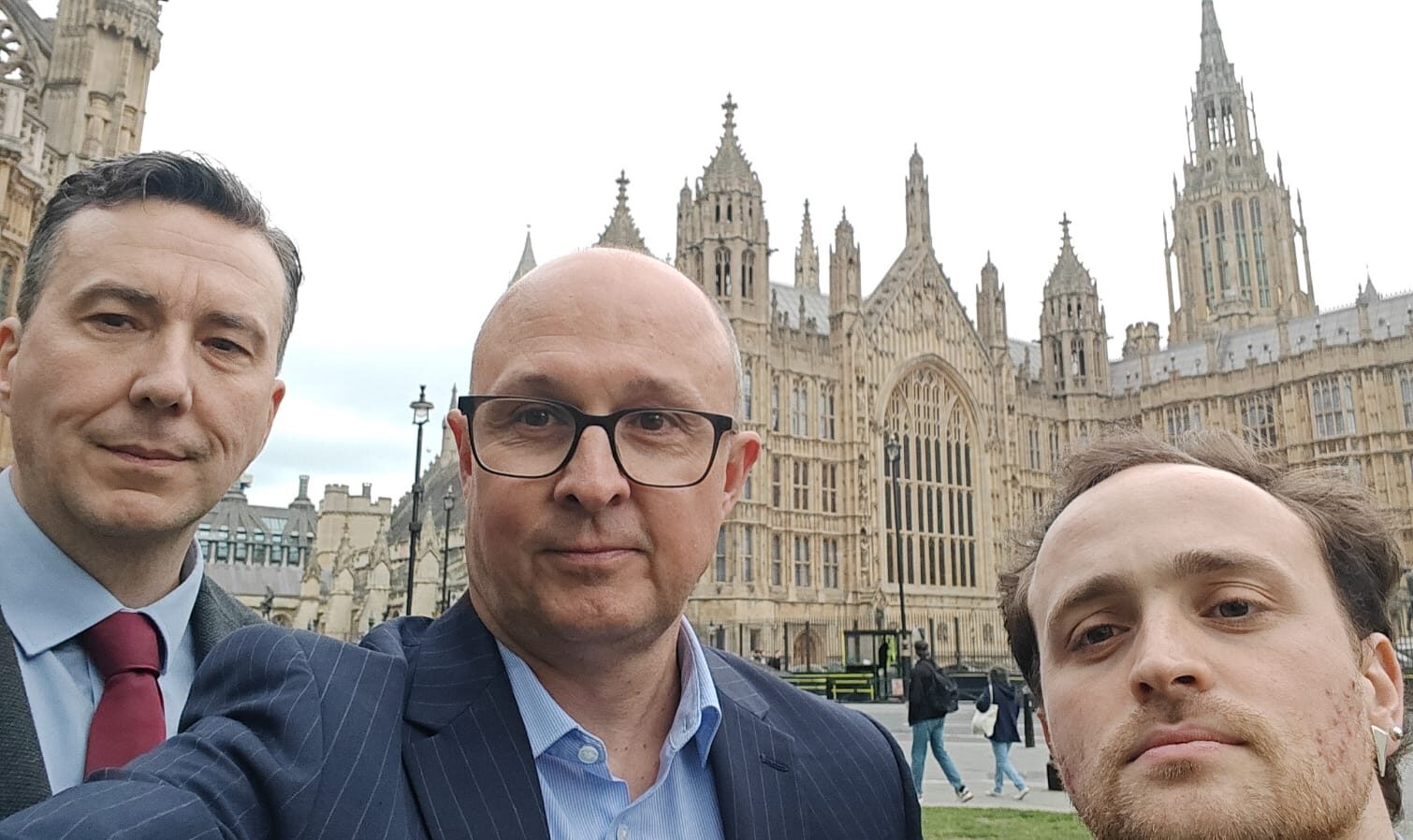
We met MPs and their teams to explain the MenB protection gap and why the Kent outbreak must lead to change.