

Vaccines
An overview of meningitis vaccines, including what they are, who can get them and why they’re important.
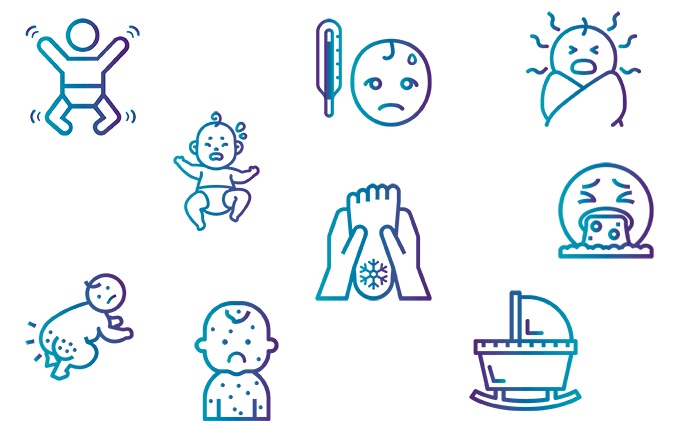
Early symptoms of meningitis and sepsis can be like other childhood illnesses, but a baby will usually get ill quickly and get worse fast. That's why it's crucial to get medical help quickly.
Early symptoms of meningitis and septicaemia (the blood poisoning form of meningitis, sometimes referred to as sepsis) can be like other childhood illnesses, but a baby will usually get ill quickly and get worse fast. That’s why it’s so important to check a baby often.
If you think your baby has meningitis or septicaemia, get medical help immediately telling the health professional you are speaking to that you are worried it could be meningitis or septicaemia.
The symptoms to watch out for are:

on the baby's head

(warning – could be normal or low in babies under three months)

May be too sleepy to wake up

or difficulty breathing

.

or marks or purple bruises anywhere on the body

(though only sometimes)

.

or refusing to feed

with a high pitched or moaning cry

Getting paler or turning blue

or else floppy and lifeless

or severe limb / joint pain

.
Always remember not all babies get every meningitis or sepsis symptom, and the symptoms can appear in any order.
If you are seriously worried about a baby who is ill, don’t wait for a rash to appear – get medical help.
But if they are already ill and have a rash, or one appears, use the tumbler test.
Press a clear glass tumbler firmly against the rash. If you can see the marks clearly through the glass, get urgent medical help immediately.
Check the entire body. Look out for tiny red or brown pin-prick marks which can change into larger red or purple blotches and blood blisters.
The darker the skin the harder it is to see a septicaemic rash, so check lighter areas like the palms of hands and soles of feet or look inside the eyelids and the roof of the mouth.
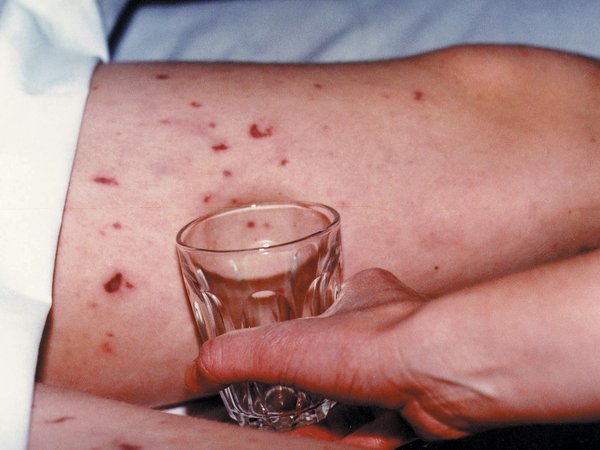
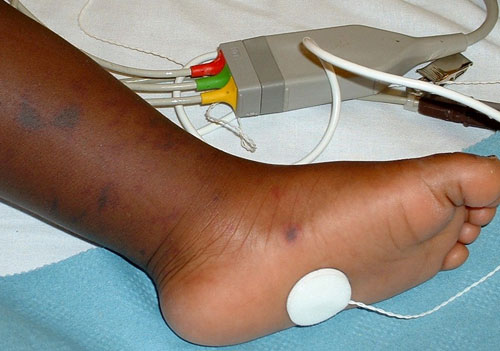
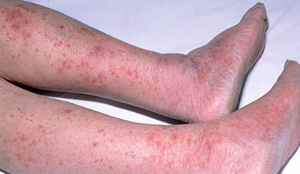
Remember, a very ill baby needs medical help, even if there are only a few spots, a rash or no rash at all.
But don’t wait to speak to us if you think you or someone you care about is seriously ill – always call your medical services.
An overview of meningitis vaccines, including what they are, who can get them and why they’re important.
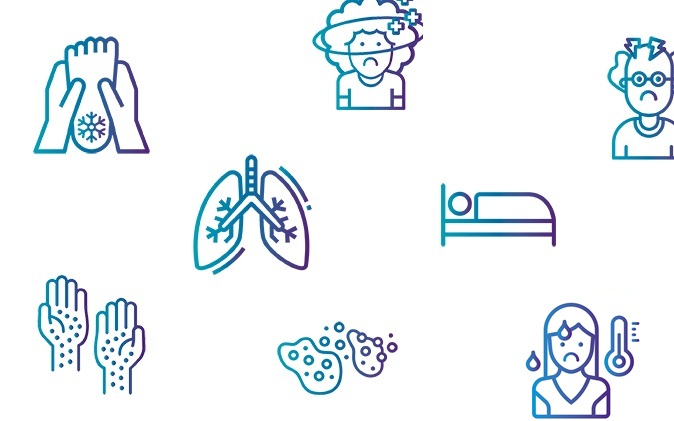
Children under five years old are more at risk of meningitis and sepsis than older children and adults. Here are the symptoms to look out for.
Teenagers and young adults are at increased risk of developing the disease, and also the most likely to carry and spread the bacteria to others.