

Key facts
- Meningitis is a serious, life-threatening disease that can kill within hours.
- The best way to protect yourself and your family from meningitis is to take up any vaccines available to you.
- Vaccine availability is different around the world.
- Vaccines prevent the most common severe causes of meningitis. They have dramatically reduced cases of meningitis throughout the world.
- Vaccines don’t protect against all causes of meningitis, so it’s important to know the symptoms.
What are meningitis vaccines?
Meningitis is the swelling of the lining of the brain and spinal cord (called meninges). It’s a serious, often life-threatening illness that can kill in hours.
Vaccination is a safe way to develop protection against some of the most common causes of the disease and reduce the spread of infections.
There’s no one vaccine which protects against the many different causes of meningitis. But there are several vaccines for those at greatest risk to protect against bacterial and viral infections – the two leading causes of the disease. They are:
- Pneumococcal vaccines.
- Meningococcal vaccines.
- Haemophilus influenzae type b (Hib) vaccines.
- Measles, mumps, rubella and varicella vaccines.
- BCG vaccine.
There are vaccines in development for other common causes of meningitis, for example group B streptococcal meningitis.
Who can get meningitis vaccines and when should you have them?
The availability of meningitis vaccines depends on:
- The type of vaccine.
- Your age and health.
- Where in the world you live.
To give your loved ones the best chance at a healthy life it’s important to know what meningitis vaccines are available.
You can find out what vaccines are available in your country by checking the WHO’s national immunisation schedule data portal.
Are meningitis vaccines safe?
Yes, meningitis vaccines are safe. The vaccines are carefully tested before they are licensed and introduced in routine immunisation programmes. Many countries, including the US and the UK, continue to track each vaccine’s safety and effectiveness.
You may experience minor side effects following vaccination. These can vary depending on which vaccine you’ve had. But symptoms are usually mild and go away on their own within a few days.
Why is it important to take up meningitis vaccines?
Meningitis is a serious, often life-threatening illness that can kill in hours. It affects around 2.3 million people globally every year.
Vaccination is the best way to protect yourself and your family against some of the common causes of meningitis. They also help prevent the spread of the disease. Vaccines have dramatically reduced cases of meningitis throughout the world.
How do meningitis vaccines work?
Meningitis vaccines work by introducing a harmless form of the bacteria or virus (called an antigen) into your body. This allows your immune system to recognise the bacteria or virus and make protective antibodies against it. These antibodies then circulate in the bloodstream. If you come into contact with the bacteria or virus you’ve been vaccinated against in future, the antibodies can destroy them before they can make you unwell.
Can you still get meningitis if you’ve been vaccinated?
Yes. There are many different strains of bacteria and viruses that can cause meningitis. There are vaccines that provide protection against the most common causes of the disease and significantly reduce the chance of infection. But there aren’t vaccines to prevent against all forms of the disease. So even if you’re fully vaccinated, it’s really important to be aware of the symptoms of meningitis.
Author: Meningitis Research Foundation.
Published: 28 March 2025.
Get support
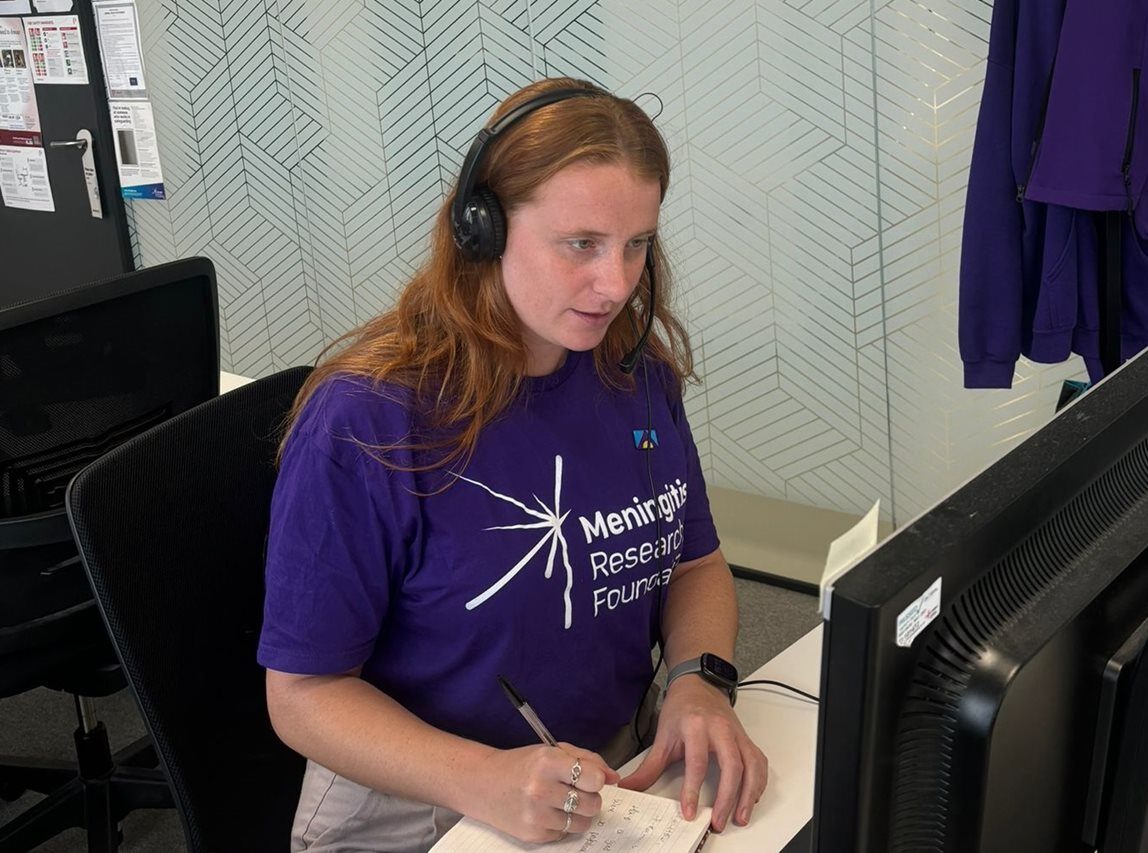
Physical and emotional recovery from meningitis and its impact can be different for everyone. Support is available if meningitis has affected you or someone you know.
If you're in the UK or Ireland, the Meningitis Research Foundation Support Services team are ready to answer your questions.
If you're outside the UK and Ireland, our member network is the Confederation of Meningitis Organisations (CoMO). CoMO is dedicated to reducing the impact of meningitis globally, with members across the world. It's a great resource for finding support where you live.