Every year, bacterial and viral meningitis affects around 2.3 million people. It kills 1 in 10 and leaves 1 in 5 with lifelong disabilities. Most cases occur in low- and middle-income countries, especially in an area of sub-Saharan Africa called the ‘meningitis belt’.
Whole genome sequencing is a powerful tool that allows scientists to track the genetic evolution of the bacteria behind meningitis. But access to this technology remains limited. This leaves major gaps in the global surveillance, outbreak response and vaccine planning which could defeat meningitis.
What is ‘Unlocking the ability of genomics to defeat meningitis’?
This £1 million project was launched in 2024. It’s funded by Wellcome and led by Meningitis Research Foundation and the Centre Suisse de Recherches Scientifiques. It aims to:
- Work with countries to assess their genomic capacity by looking at barriers and opportunities for meningitis-related genome sequencing in low-resource settings.
- Turn this into actions. Identify where investment in genomics is most needed and how genomic data can be used to inform public health responses to meningitis.
- Establish global standards for meningitis-specific metadata and data sharing.
- Foster collaboration across scientific, public health and policy sectors and ensure the research leads to impact.
Together, these efforts support the World Health Organization’s Global Road Map to Defeat Meningitis by 2030
Mapping the genomic journey from sample to public health action
Developed by the Global Meningitis Genome Partnership, the Meningitis Genomics Value Chain Framework systematically maps the path from case identification and sample collection to genome sequencing and actionable insights. It helps countries assess readiness, prioritise investment and coordinate public health responses.
What is a bacterial genome?
It’s the complete genetic code of a bacterium. Understanding it helps:
- Track meningitis outbreaks.
- Detect resistance to antibiotics.
- Evaluate whether the vaccines will protect against the types of bacteria causing the outbreaks.
Our four research streams
1. Unlocking the power of genomics to defeat meningitis: barriers and opportunities
Leads: Dr Kanny Diallo and Dr Gilbert Fokou, Centre Suisse de Recherches Scientifiques, Cote D’Ivoire
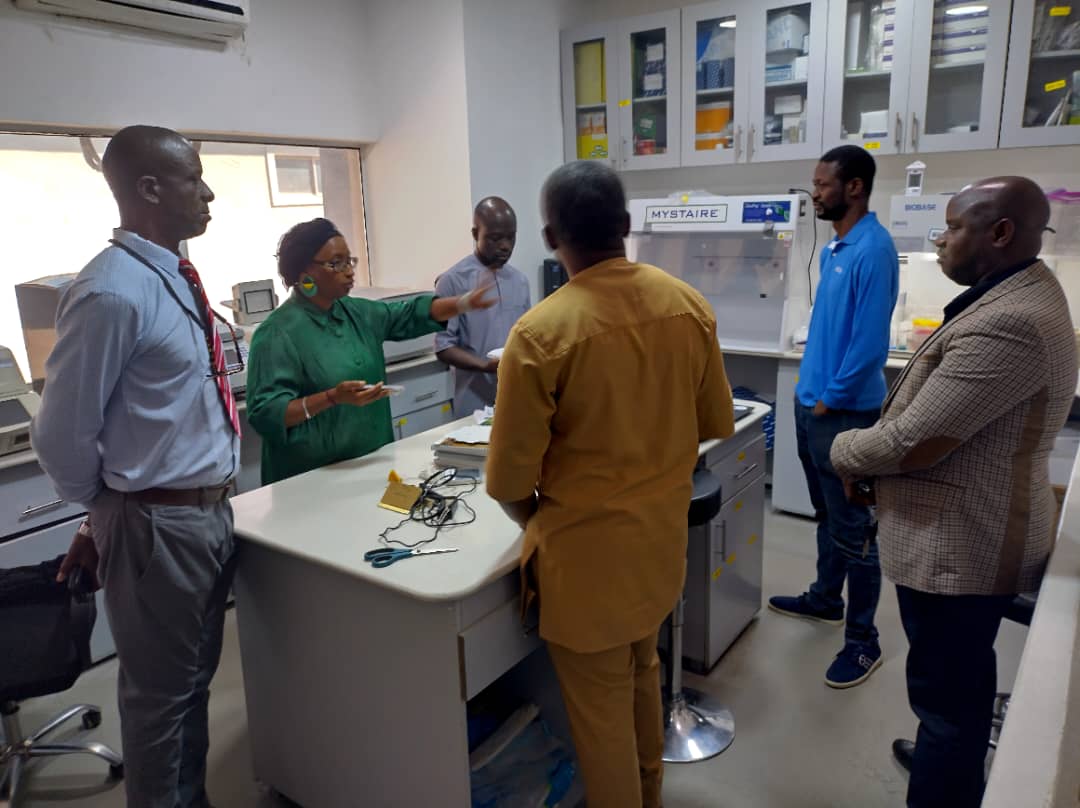
- Piloting the Meningitis Genomics Value Chain Framework: conducting qualitative research in six countries, working with local researchers to evaluate each country’s ability to conduct genomic surveillance and uncover the barriers and opportunities for genome sequencing of bacterial meningitis in low- and middle-income countries.
- Identifying capacity gaps and investment priorities.
2. Strengthening the case for using genomics to inform the public health response to meningitis
Leads: Dr Kanny Diallo, Centre Suisse de Recherches Scientifiques and Professor Caroline Trotter, University of Cambridge
- While sequencing infrastructure has improved across many countries, there is limited evidence on how genomic data is being used to inform public health decisions for meningitis in Africa. A review of the existing scientific knowledge in this area will be conducted to determine scope for improvement.
Building on these insights, the leads will deliver genomics training to public health scientists in Africa’s meningitis belt, supporting work with communities who experience the highest number of meningitis cases in the world.
3. Creating the standard for genome data sharing: capturing metadata to defeat meningitis
Leads: Dr Samy Taha and Professor Muhamed Kheir Taha, Institut Pasteur, Paris
- Creating a global metadata standard (a consistent, structured way to describe and share information) for bacterial meningitis, to maximise genome data collection and sharing.
4. Building engagement in the role of genomics in defeating meningitis
Lead: Lucinda Inman, Meningitis Research Foundation
- Driving awareness and partnerships through events, such as the Meningitis Research Conference, to foster new collaborations and increase understanding of the power of genomics in controlling meningitis.
- Coordinating the Global Meningitis Genome Partnership.
The Global Meningitis Genome Partnership: a global scientific collaboration
The Global Meningitis Genome Partnership brings together researchers, laboratories and public health agencies from around the world. It focuses on coordinated data collection, sequencing and sharing for the four leading causes of bacterial meningitis.
This project is funded by Wellcome (grant number: 228143/Z/23/Z).